
A homemade property game, hand-drawn on a round piece of oilcloth, sold at Sotheby’s in 2010 for $146,500. That is a lot of money for something that started as a Depression-era side project.
I love that it was never meant to be a museum piece.
Old games carry stories that new copies cannot. Some came from a single kitchen table.
Hi! This post may contain affiliate links to online stores. If you use a link and buy something, I may get a commission at no extra cost to you. See my affiliate disclosure.
Others came from Victorian printers who used stone lithography to make boxes look like tiny posters. A few started as cheap mail-in prizes tucked into grocery packages.
What surprised me most is how often value comes down to small stuff. A missing card, a cracked plastic idol, or a dead battery can change everything.
Condition and completeness matter far more than age alone.
So which first editions have crossed from toy shelf to auction block? The list below covers Victorian classics, monster-themed oddities, and some surprisingly modern favorites.
1. Charles Darrow’s Handmade Monopoly (1933)

Before Parker Brothers got involved, Charles Darrow made Monopoly sets by hand. One of them is round, drawn on oilcloth, and looks more like a tablecloth than a board.
That circular set dates to 1933 and features hand-inked property spaces. You can spot it instantly because nearly every later version uses a square board.
For collectors, early Darrow pieces are about provenance, not just looks. Hand-drawn items are easy to fake, so documented ownership history matters a lot.
In December 2010, the circular Darrow set sold at Sotheby’s in New York for $146,500. It’s a reminder that the game’s own history is far messier than the official story, since Darrow built on earlier designs by others.
2. Monopoly 1935 Parker Brothers First Edition
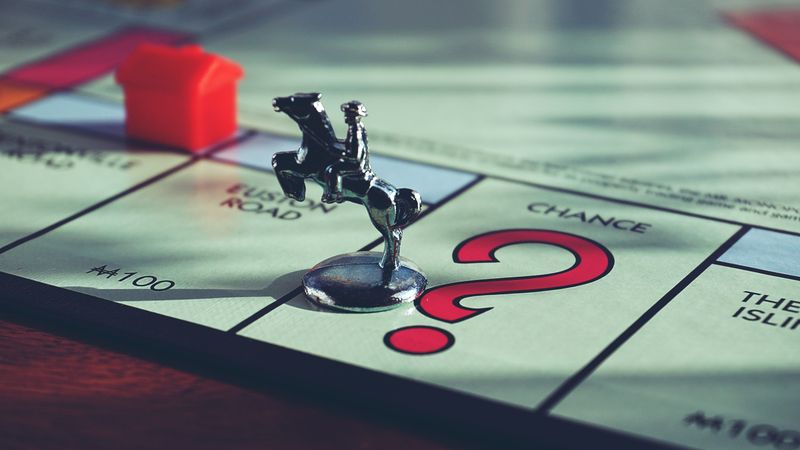
Parker Brothers bought the rights to Monopoly in 1935, and the rest is family-argument history. Those first Parker Brothers sets look surprisingly different from the box in your closet.
Early versions came in several box styles, including a slim white box and a larger box with a separate board. Look for early patent wording on the packaging and wooden houses and hotels instead of plastic ones.
Because Monopoly sold in huge numbers, many “old” sets are actually later reprints. Check copyright dates on the board, rules, and box rather than trusting a seller’s guess.
Matching parts matter too, since owners often swapped pieces between sets for decades. A complete, consistent early set is a much better find than a mix-and-match bundle.
Sets listed as 1935 Parker Brothers copies with wooden pieces sold for $39.95 and $80 on eBay in 2025. Only about 25,000 of the first Trade Mark edition were made, so most 1935-dated sets are later printings.
3. The Landlord’s Game (1906 Economic Game Company)

Monopoly’s real grandmother was designed to teach a lesson about greedy landlords. Elizabeth Magie patented The Landlord’s Game in 1904 to show the problems with land monopolies.
The Economic Game Company of New York published it in 1906. Its square track of properties, railroads, and a jail corner will look oddly familiar to anyone who’s played Monopoly.
Magie’s idea came with two rule sets, one rewarding monopolists and one sharing wealth more fairly. Surviving copies are uncommon, so original rules and board are key to a complete set.
Magie’s role was largely forgotten for decades until researchers brought it back to light. Today, early copies are treated as major artifacts of American game history, not simple toys.
4. The Checkered Game of Life (1860 Milton Bradley)
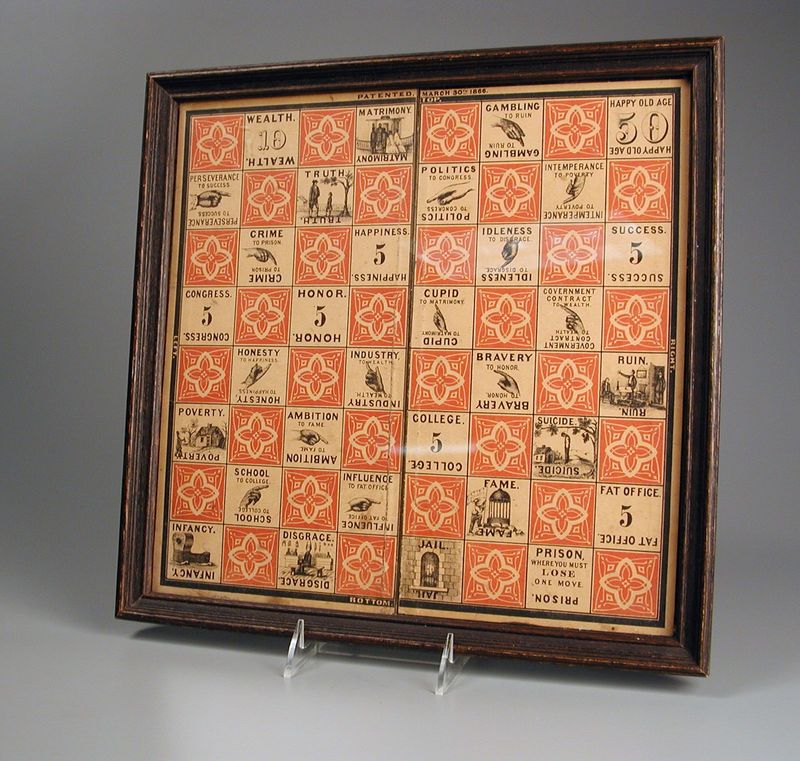
Milton Bradley was a lithographer before he was a game maker. His first game, The Checkered Game of Life, came out in 1860 and kick-started a company that’s still a household name.
The board looks like a checkerboard, with squares labeled by virtues and vices such as Honesty, Idleness, and Happy Old Age. Players used a teetotum, a small spinning top, instead of dice, which were frowned upon by many families back then.
Paper boards from 1860 are fragile, so tears, stains, and fading are common. A copy with its original teetotum and pieces is far easier to sell than a board alone.
The game’s success funded Bradley’s business. A century later, his company reinvented the idea as The Game of Life.
5. Bulls and Bears: The Great Wall Street Game (McLoughlin Brothers, 1896)
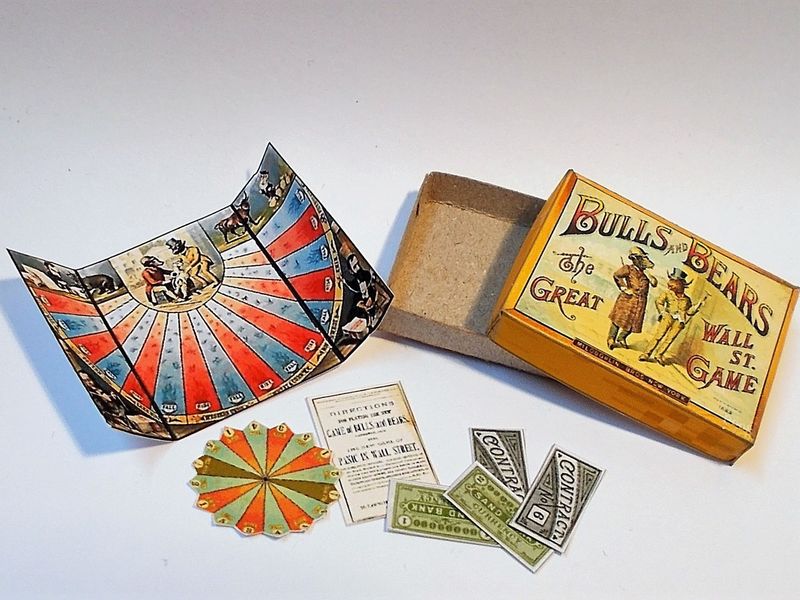
Stock market drama was board game material back in 1896. McLoughlin Brothers turned Wall Street speculation into Bulls and Bears: The Great Wall Street Game.
The box features colorful chromolithographed artwork with financial and political caricatures of the day. The McLoughlin Brothers name of New York should appear on the box and board.
Collectors of antique games and financial memorabilia both chase this one, which means competition. Bright, unfaded color and an intact lid are big deals for McLoughlin boxes, which often suffered edge wear.
The game is a time capsule of Gilded Age money worries, complete with period jokes about investors. It’s frequently cited by antique toy specialists as one of the standout McLoughlin titles.
A scarce McLoughlin Bulls and Bears game sold for $20,740 at a Pook & Pook antique toy auction.
6. Round the World with Nellie Bly (McLoughlin Brothers, 1890)
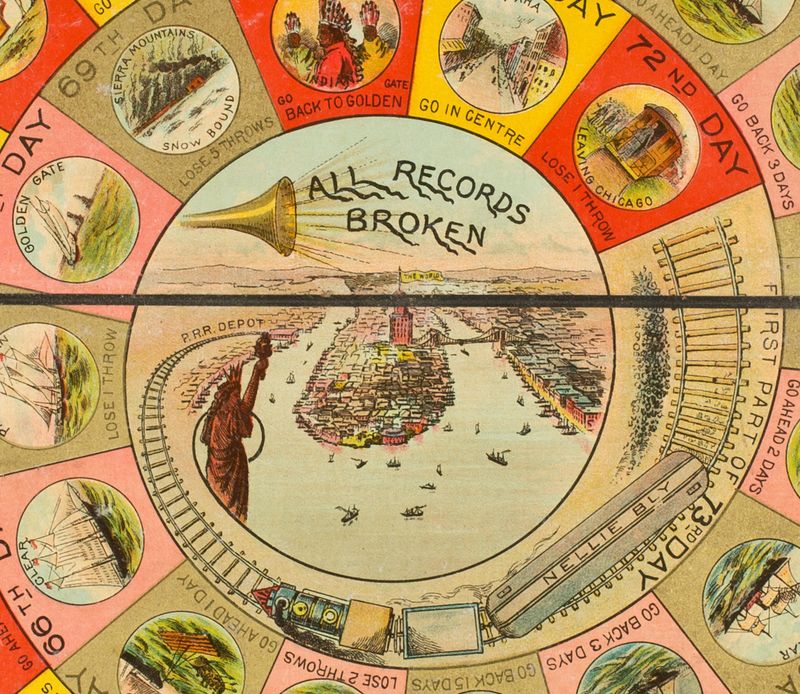
Nellie Bly raced around the globe in 72 days, beating the fictional Phileas Fogg. McLoughlin Brothers quickly turned her real-life trip into a board game in 1890.
The board follows a spiral path of 73 spaces tracing her journey, with Bly’s portrait at the center. Players move along the route, hoping to avoid delays that set them back.
Look for the McLoughlin imprint and the 1890 date, since later games borrowed the Bly theme. Paper boards from this era often show folds and fading, so judge condition carefully.
Bly’s trip was sponsored by the New York World newspaper, which made her a celebrity. This game shows how fast the toy business jumped on a headline even in the 1890s.
A lot of nine McLoughlin games including Round the World with Nellie Bly sold for $938 at Hindman in December 2021.
7. The Game of District Messenger Boy (McLoughlin Brothers, 1886)

Long before email, city kids delivered telegrams on foot and by bike. McLoughlin Brothers turned that job into The Game of District Messenger Boy in 1886.
Players start as messenger boys and work their way up, with the goal of rising to president of the company. The cover shows a boy in a messenger uniform, which helps you spot it fast.
McLoughlin reissued popular titles, so dates and box sizes can vary. Comparing artwork and the copyright line against reference images helps separate early copies from later ones.
The rags-to-riches theme matched popular stories of that era. It’s a neat snapshot of what parents hoped kids would learn, which apparently was hard work and punctual deliveries.
An 1886 McLoughlin District Messenger Boy set sold for $357.50 at Wm Morford Antiques.
8. McLoughlin Brothers Home Baseball Game (1897)
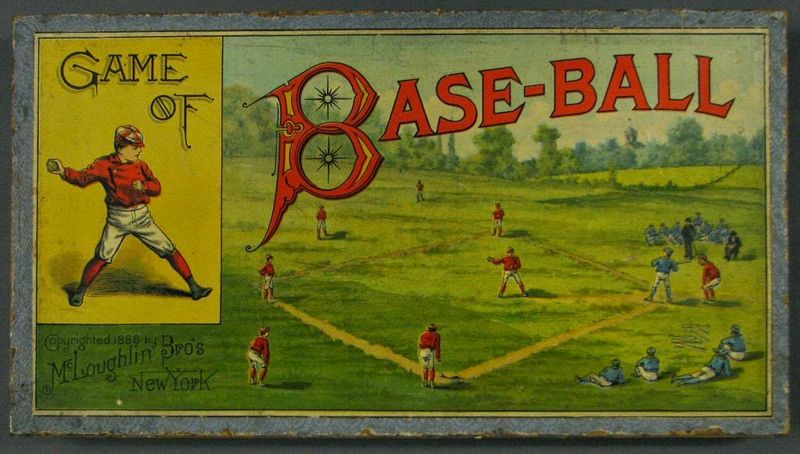
Baseball fans in the 1890s didn’t have TV, so they played the game on the kitchen table. McLoughlin Brothers released its Home Baseball Game in 1897.
Look for players in old-time uniforms on the box art and the McLoughlin Brothers New York imprint. The board shows a baseball diamond, and original spinners or counters should be present.
This title appeals to both game collectors and sports memorabilia fans. That crossover can push interest higher than you’d expect for a simple tabletop baseball game.
Small parts often went missing over a century of use. A copy with its playing pieces intact is a stronger find than a pretty box with an empty inside.
A c. 1900 McLoughlin baseball game sold for $466.80 at SCP Auctions in 2017.
9. Ouija Board by Kennard Novelty Company
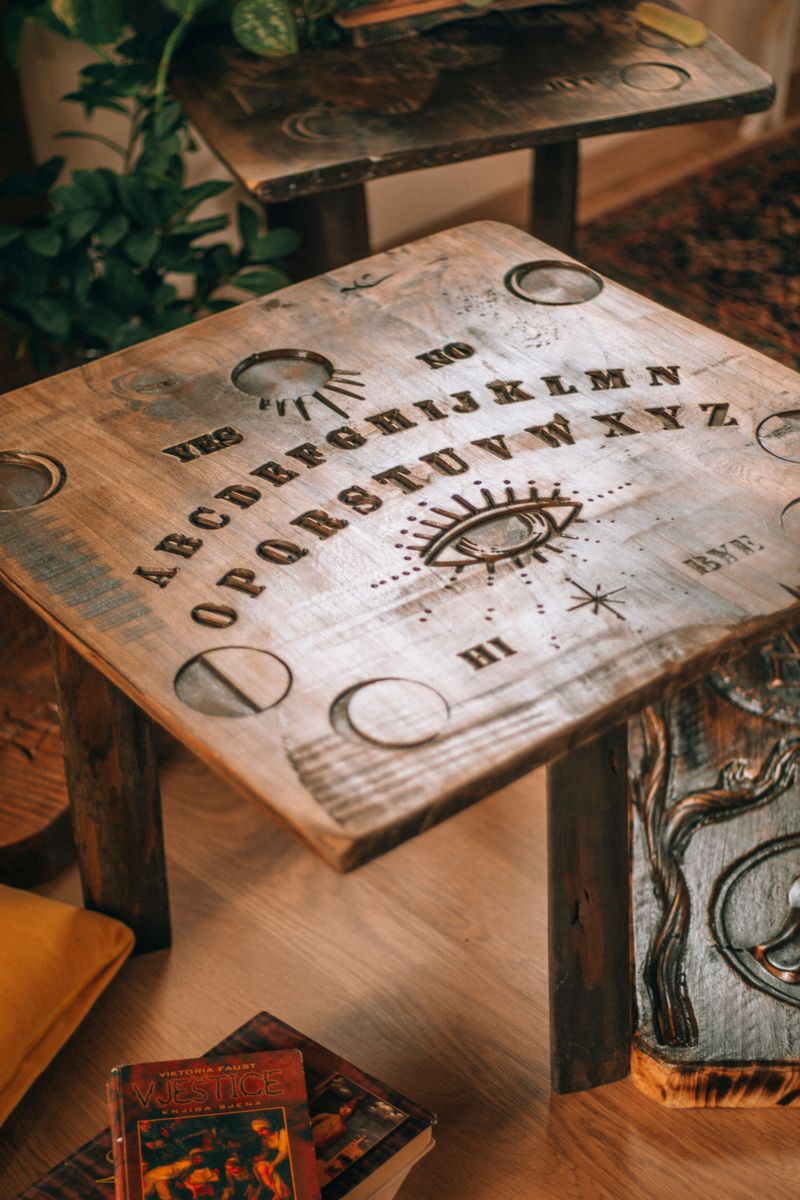
Elijah Bond received a patent for the Ouija board in 1891. The Kennard Novelty Company of Baltimore sold the early boards, before William Fuld later took over production.
Early boards are wooden, with the alphabet arced across the middle and YES and NO in the corners. Patent dates printed on the board are a key clue to its age.
An original planchette, the small pointer, adds to value since many were lost. Heavy wear isn’t always a deal-breaker, but repainting usually hurts collector interest.
The name Ouija itself became a trademark, so many lookalike talking boards exist. Make sure the maker matches before you get excited about an early example.
Recent auction results put early Kennard Novelty and Fuld boards in the $500 to $3,000 range.
10. Pank-A-Squith Suffragette Game (c. 1909)

Here’s a board game with a political mission. Pank-A-Squith was sold around 1909 to support the British fight for women’s voting rights.
The name combines Emmeline Pankhurst and Prime Minister H. H.
Asquith, who opposed the suffragettes. The spiral board leads players toward the goal of women winning the vote.
The movement’s colors of purple, white, and green help identify it. Original pieces are small and easy to lose, so a complete set is a treat.
Museums treat Pank-A-Squith as an important piece of suffrage history. It shows how activists used everyday items to spread their message at home.
An incomplete set without its board sold for £620 at Hansons, six times its estimate, and another example reached £4,080.
11. Sorry! (1934 Parker Brothers)

Few games let you apologize while ruining someone’s day. Sorry! was patented in England by William Henry Storey in 1929, and Parker Brothers brought it to the US in 1934.
Instead of dice, you draw cards to move your pawns around the board. The Sorry! card lets you bump an opponent back to start, which explains the name.
Early Parker Brothers sets have older box art and wooden pawns, unlike the plastic versions later on. Check copyright dates on the board and rules to confirm age.
Since Sorry! stayed in print for decades, most copies aren’t rare. The early ones, in good shape with full card decks, are the ones collectors notice.
A complete 1930s Parker Brothers set with wooden tokens sold for $19.99 on eBay in October 2025.
12. Scrabble (1948 Production and Marketing Company)
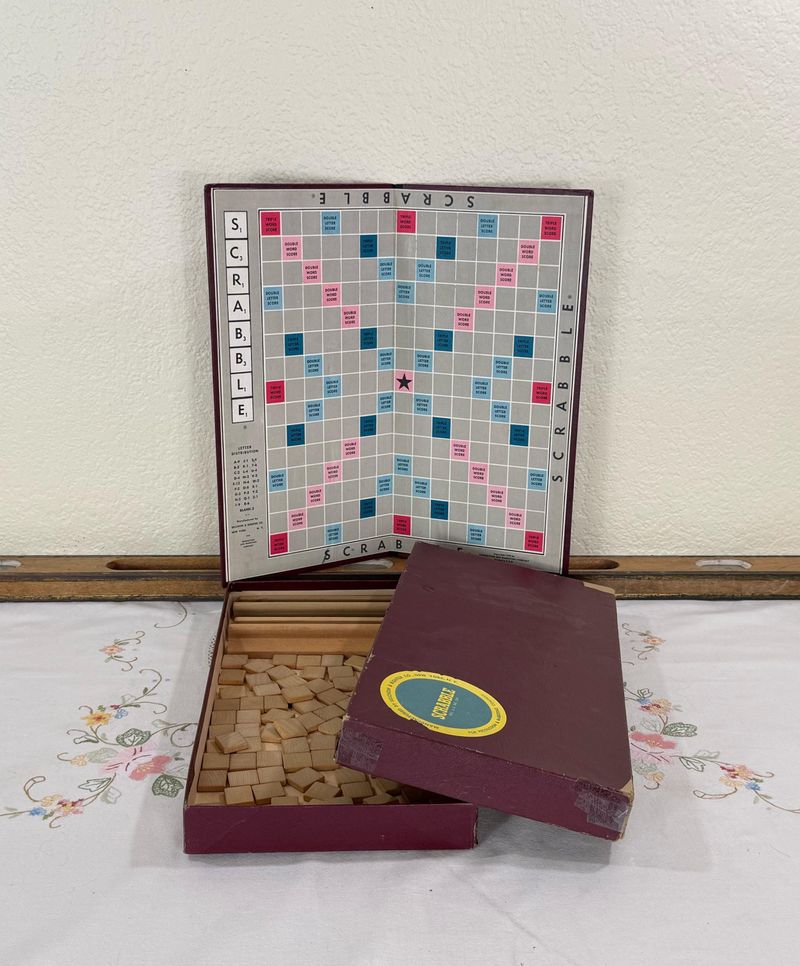
Scrabble began life as Criss-Crosswords, invented by architect Alfred Mosher Butts. James Brunot later renamed it and sold sets through his Production and Marketing Company starting in 1948.
Early Brunot sets were assembled by hand, a slow start before demand exploded in the 1950s. Look for the Production and Marketing Company name on the box and wooden tiles.
Tiles are easy to lose, so count them against the original letter distribution. Rule sheets and racks from the same era also help.
Later Selchow and Righter took over production as orders grew. That makes the early Brunot sets a fun piece of word-game history.
The Brunots sold only 2,413 games in 1949.
13. Cluedo (1949 Waddingtons)
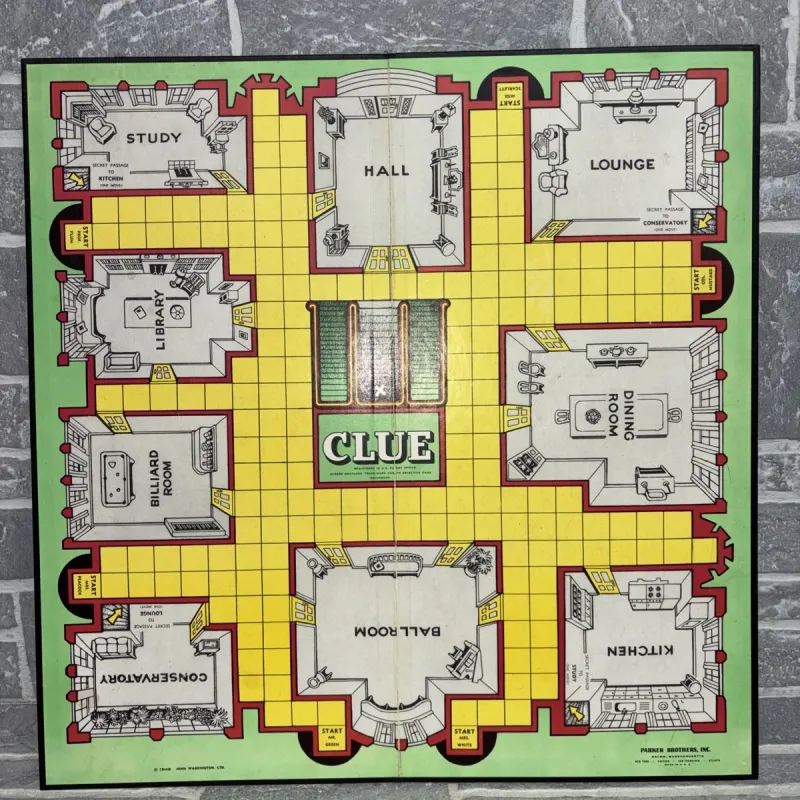
A British musician named Anthony E. Pratt invented this mystery game.
Waddingtons released Cluedo in the UK in 1949, and Parker Brothers sold it as Clue in America.
The US version renamed Reverend Green to Mr. Green. Early boxes, cards, and weapons look different from modern versions.
Small weapon pieces often vanish, so check for a full set. The card decks and detective notepads should also be complete.
Waddingtons first editions are especially interesting to British collectors. If you have Clue from Parker Brothers, check for the 1949 date on the box.
14. The Elvis Presley Game (1957)

In 1957, Elvis wasn’t just on the radio. He also had his own board game, made by Teen-Age Games Inc.
The box features a photo of young Elvis in bright 1950s colors. Players move around the board answering questions about his songs.
Licensed Elvis items from that year are tricky to find complete. Fans and game collectors both compete for them.
Watch for later Elvis games that borrow the vintage look. Check for the Teen-Age Games name and 1957 date.
15. Swift Meats Baseball Game (1957)

This baseball game came from hot dog packages. Swift Meats put punch-out player cards in its franks in 1957 and offered a game board by mail.
The set includes 18 player figures. Fans had to collect cards and send away for the board.
Many kids played with or threw out the pieces, so complete sets are scarce. Unpunched cards are worth more than used ones.
Both card and game collectors chase this set. Make sure the board and full card set are together.
A complete 1957 Swift Meats set with its game board sold for $2,644 in 2010, and another with its mailing envelope reached $3,819 in 2009.
16. Risk (1959 Parker Brothers)
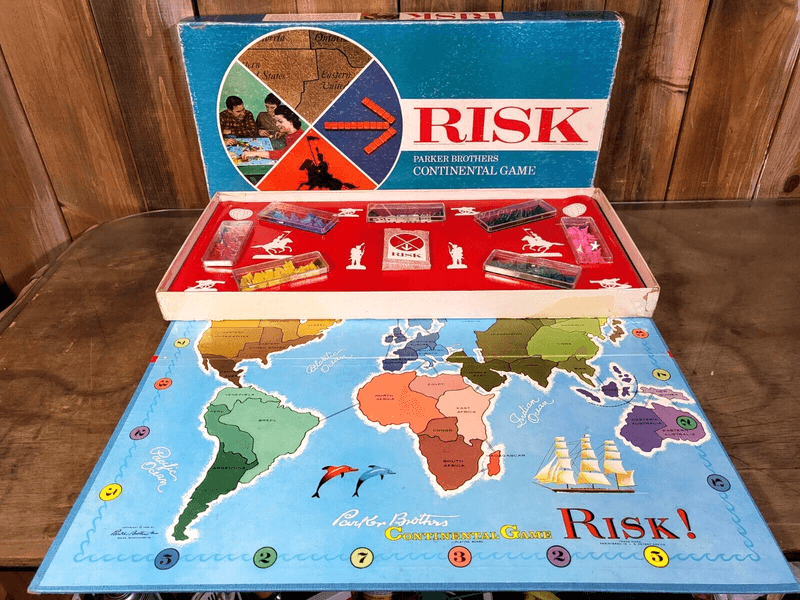
Risk began in France as La Conquête du Monde, created by filmmaker Albert Lamorisse in 1957. Parker Brothers brought it to the US in 1959.
The first US editions used wooden cubes for armies. Later versions changed to plastic.
Count the pieces in each color, since wooden cubes go missing. Look for the 1959 copyright and old-style box.
Lamorisse also directed the film The Red Balloon. He went from movies to world domination, at least on a board.
A complete 1959 first edition with wooden pieces is listed at $129.99. Winning Moves sold a 1959 reproduction, so check the box carefully.
17. The Game of Life (1960 Milton Bradley)
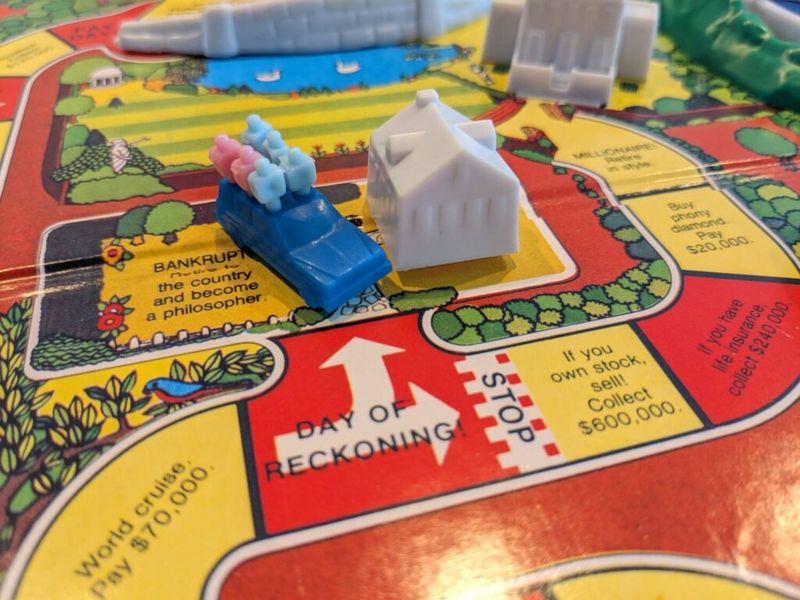
Milton Bradley celebrated its 100th anniversary with a new version of its oldest idea. The Game of Life arrived in 1960, designed by Reuben Klamer.
The box features TV host Art Linkletter. The board has 3D hills and buildings plus a spinner in the middle.
Small cars and pegs often go missing. Check that the plastic buildings aren’t cracked.
This version replaced the 1860 Checkered Game of Life. It became a big seller and is still in stores today.
A complete 1960 first edition sold for $33 on eBay in August 2025.
18. Mouse Trap (1963 Ideal)
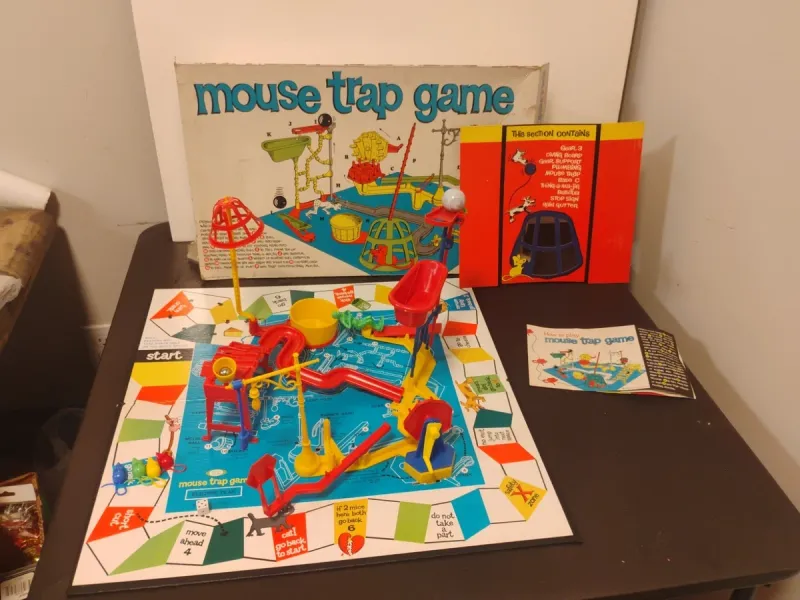
Few games include a crank, a boot, a bathtub, and a diving man. Ideal released Mouse Trap in 1963, created by Marvin Glass and Associates.
Players build a crazy machine during play. The goal is to trap other players’ mice.
With so many plastic parts, complete sets are hard to find. Check the box to make sure all pieces are there.
The design was inspired by Rube Goldberg-style machines. Later versions changed some parts, so look for the Ideal name.
A complete 1963 Ideal copy with its original box sold for $65.99 on eBay in August 2025.
19. Acquire (1964 3M Bookshelf Game)
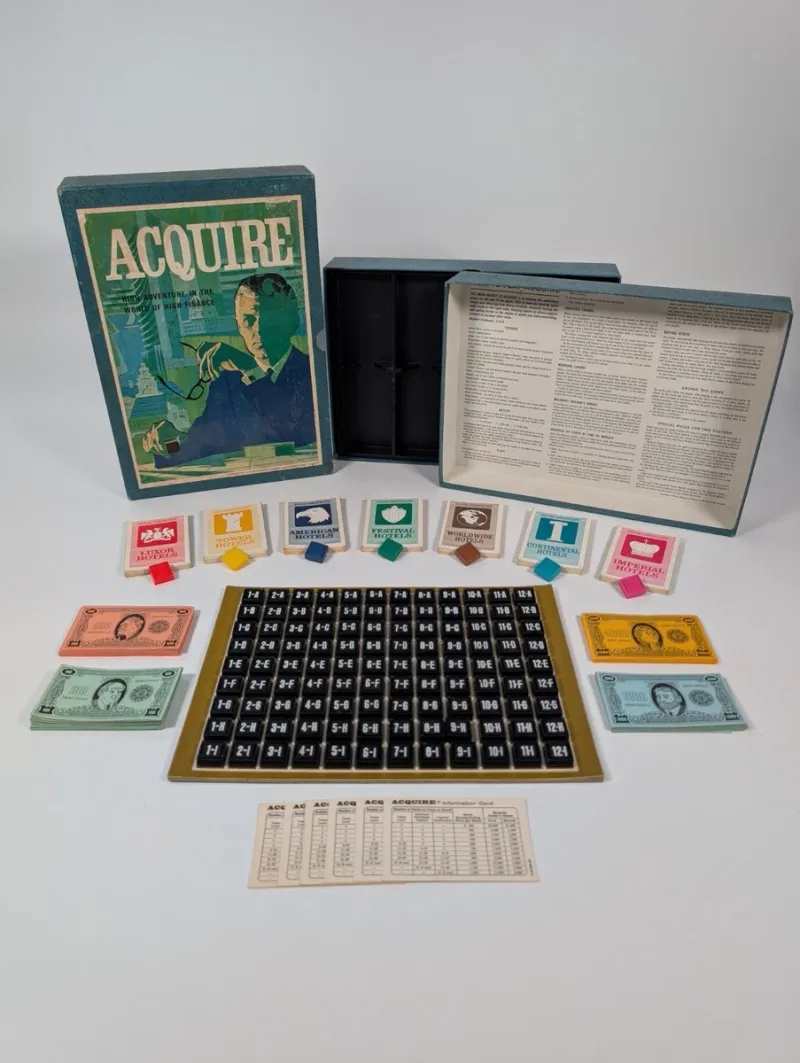
Acquire was designed to sit on a shelf like a book. Sid Sackson’s hotel merger game came out in 1964 from 3M.
Players place tiles to build hotel chains and buy stock. Merging chains can make you rich.
Early copies use the bookshelf box style. Check that all tiles and stock certificates are there.
Acquire has been reprinted many times. The 3M editions are the ones collectors seek.
20. Mystery Date (1965 Milton Bradley)
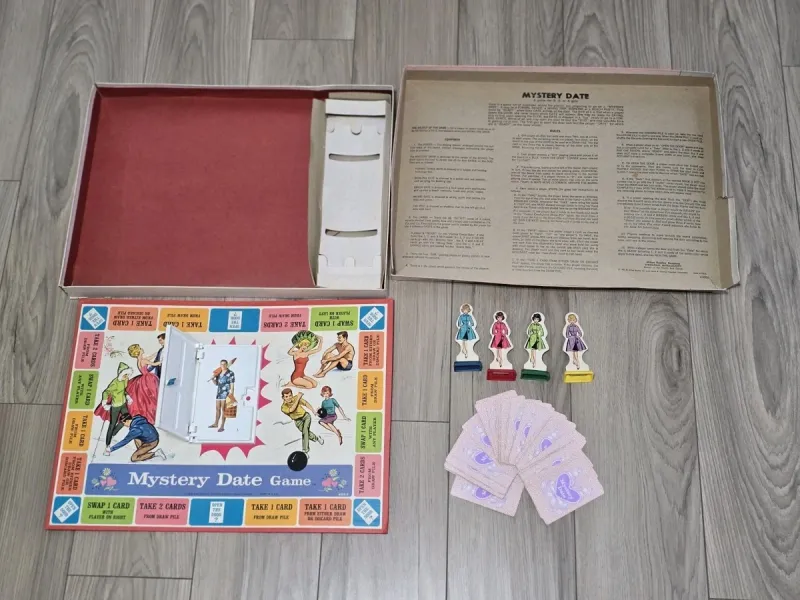
One door on the board decided your evening. Milton Bradley’s Mystery Date came out in 1965.
Players collect outfit cards to match a date waiting behind the door. One date is a dud, which kids remember.
The plastic door and cards are key. Missing cards hurt value.
The game reflects 1960s ideas about dating. Later versions changed the look.
Complete 1965 copies are commonly listed between $50 and $99 on eBay.
21. Batman and Robin Game (1965 Hasbro)
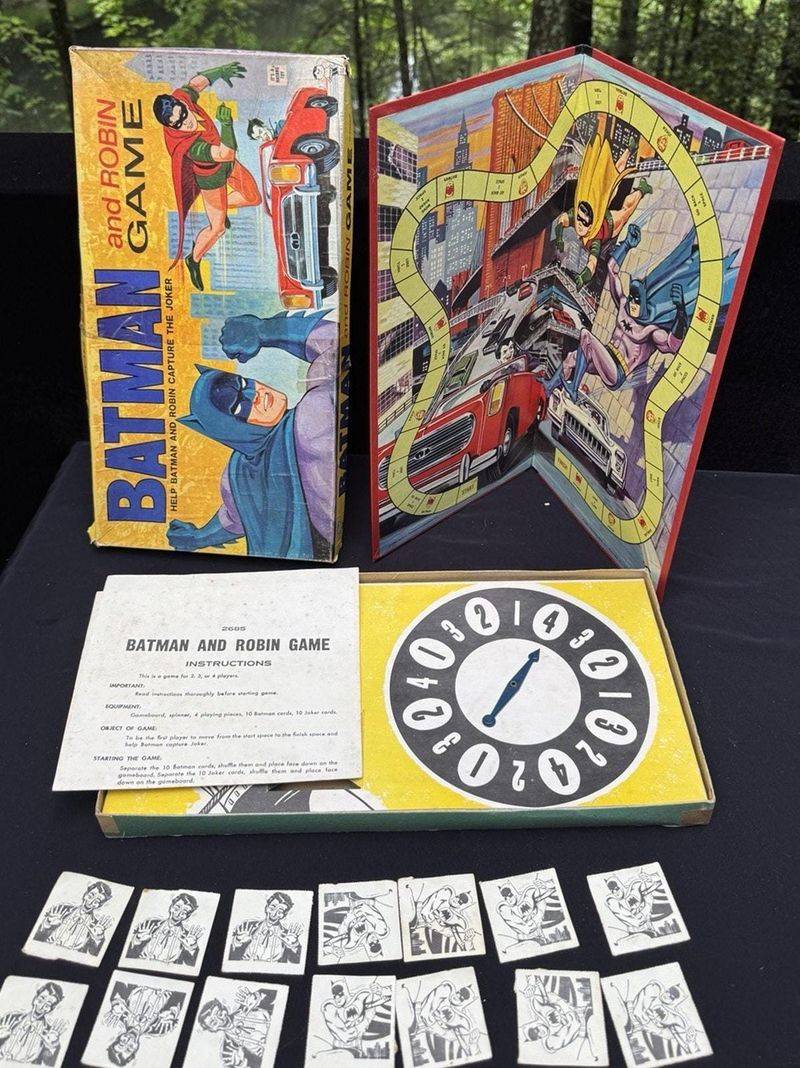
Batman fever was building in the mid-1960s. Hasbro’s Batman and Robin Game uses comic book art.
The box shows the Dynamic Duo in bold colors. Check the 1965 date and Hasbro name.
Comic fans and game fans compete for copies. Clean, bright boxes are best.
Look for complete pieces. Many games from that time are missing parts.
22. Boris Karloff’s Monster Game (1965)

The famous Frankenstein actor lent his name to a board game. Boris Karloff’s Monster Game came out in 1965 from Gems.
The box shows cartoon monsters in spooky style. Players race around the board.
Monster fans love this one. Check for all cards and pieces.
Karloff appears on the box. That helps confirm an original.
A mint, complete 1965 copy sold for $425 on eBay in September 2025.
23. Lost in Space 3D Action Fun Game (1966 Remco)
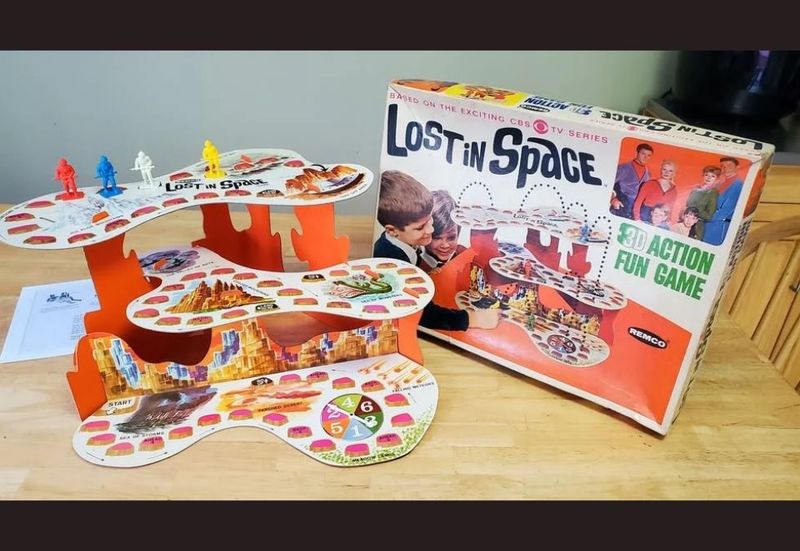
The Robinson family went to space on CBS in 1965. Remco turned the show into a 3D game in 1966.
The game has stacked levels players move through. The box shows scenes from the show.
Plastic parts are fragile. Check for cracks.
TV fans and game fans both chase it. Complete sets are best.
A complete 1966 Remco copy sold for $445.28 at Hake’s in March 2013, and an unused one reached $853.88.
24. Escape from Colditz (1973 Gibsons Games)
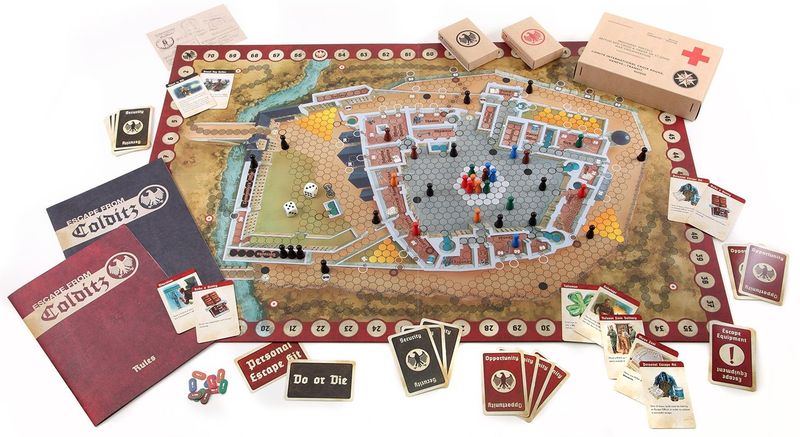
A real prisoner of war co-designed this game. Major Pat Reid escaped Colditz Castle during World War II and later helped create the game with Brian Degas.
Parker Games, a division of Palitoy, published it in 1973. One player is the guards, the others plan escapes.
Check for escape kits and cards. Missing pieces hurt value.
The game has a loyal fan base. Its link to real history makes it special.
25. Dungeons & Dragons Original Woodgrain Box (1974 TSR)
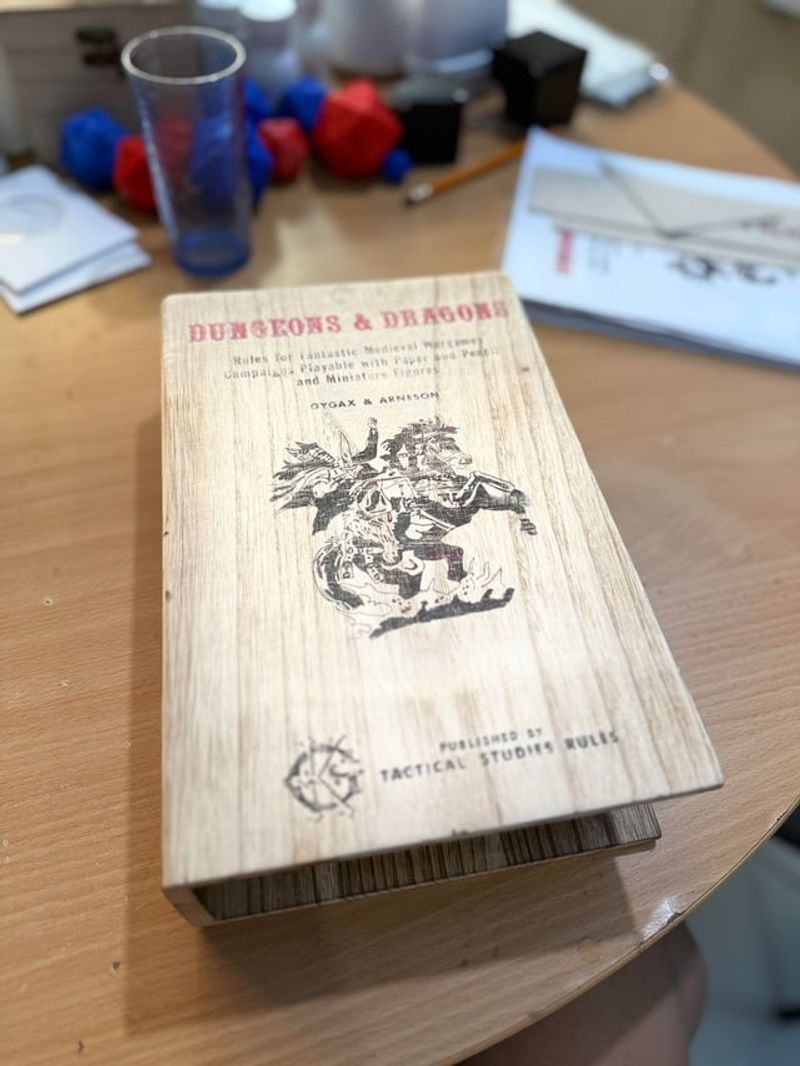
The first D&D set came in a brown woodgrain box. Gary Gygax and Dave Arneson’s game was published by TSR in 1974.
The first printing was 1,000 copies. It included three small booklets.
Later printings look similar, so check details carefully. Experts can help confirm the printing.
Reports say one copy sold on eBay for about $22,100 in 2016. That’s a lot for a set that first cost $10.
26. Civilization (1980 Hartland Trefoil)
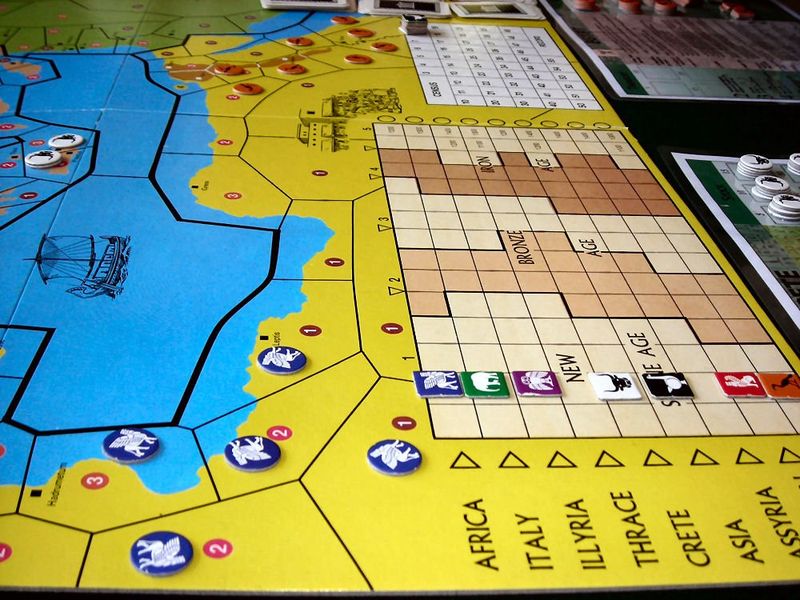
Francis Tresham designed this game about ancient empires. Hartland Trefoil published it in the UK in 1980, and Avalon Hill released it in the US.
Players grow civilizations across the Mediterranean. Trading and advances matter.
Check for all cards and tokens. Many copies were heavily played.
Look for the Hartland Trefoil name. Early copies are prized by strategy fans.
27. Dark Tower (1981 Milton Bradley)
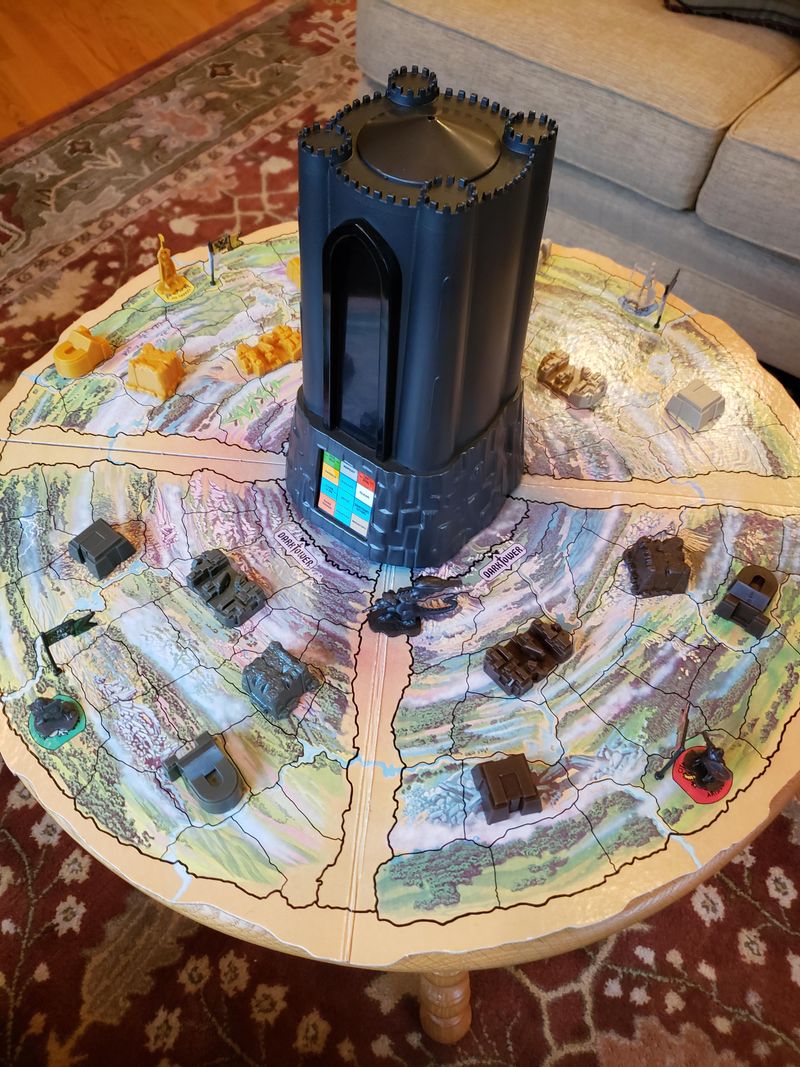
A talking tower ran this game. Milton Bradley released Dark Tower in 1981.
The battery-powered tower tracked moves and played sounds. Players gathered keys to enter.
Check that the tower still works. Battery leaks can ruin it.
Restoration Games released a new version in 2023. Originals still attract fans.
A complete, working 1981 copy sold for $287.50 on eBay in October 2025.
28. Talisman (1983 Games Workshop)
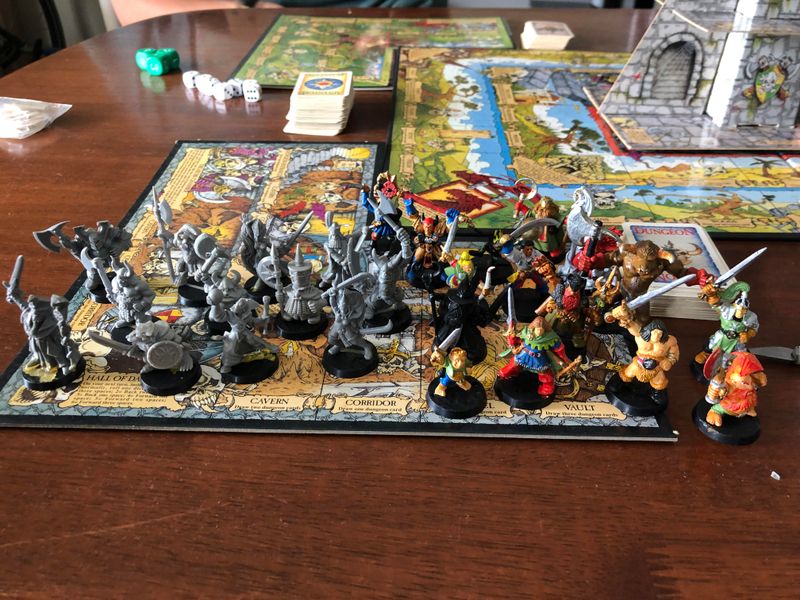
Robert Harris designed this fantasy adventure. Games Workshop released Talisman in 1983.
Players move around a board to reach the Crown of Command. Cards and dice decide events.
Check for complete card decks. Early editions have different art.
Talisman has had many editions. The first is special to fans.
A 1983 first edition is listed at €400.
29. Tales of the Arabian Nights (1985 West End Games)
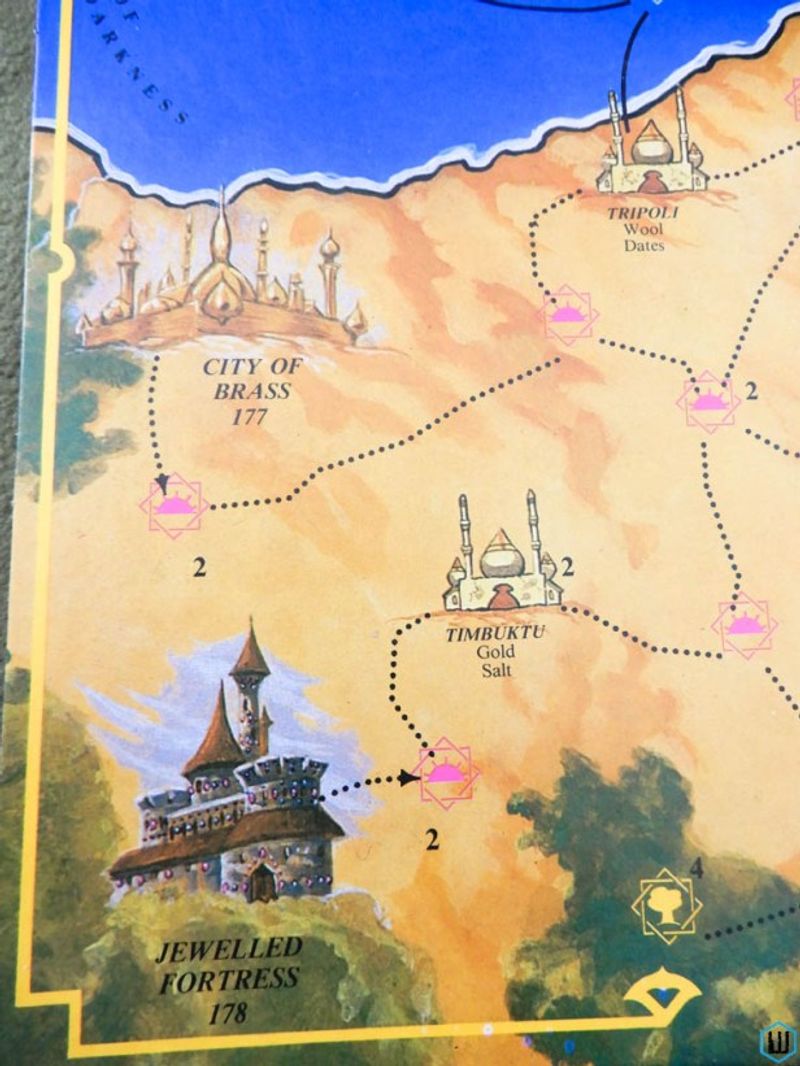
This game came with a giant storybook. West End Games released Tales of the Arabian Nights in 1985, designed by Eric Goldberg.
Players read paragraphs from the Book of Tales. Choices shape the story.
Check that the book is complete. Missing pages hurt value.
Later versions came out. The original is prized.
30. Fireball Island (1986 Milton Bradley)
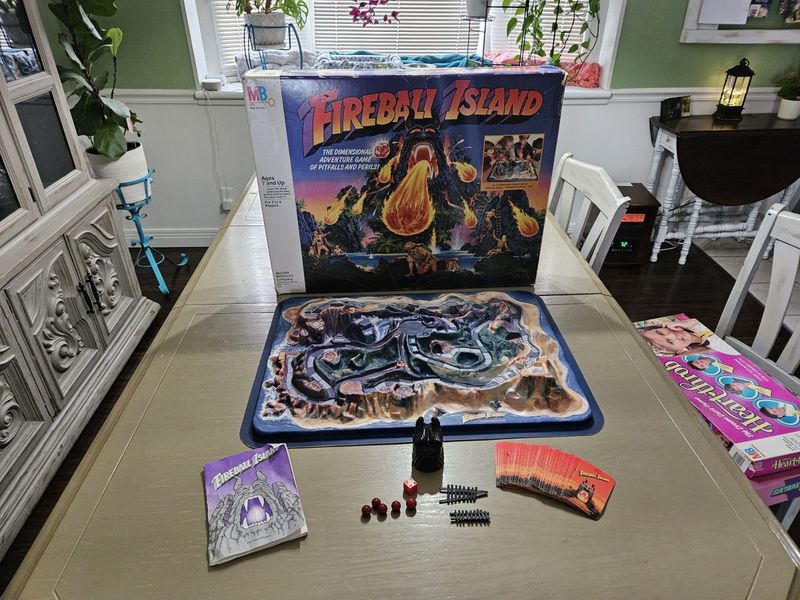
A giant idol named Vul-Kar rolled marbles at players. Milton Bradley released Fireball Island in 1986.
The 3D board is plastic. Players try to grab a jewel and escape.
Check for cracks and all marbles. Missing parts hurt value.
Restoration Games remade it in 2018. The original is still loved.
A nearly complete 1986 copy sold for $180 on eBay in September 2025.
31. HeroQuest (1989 Milton Bradley)
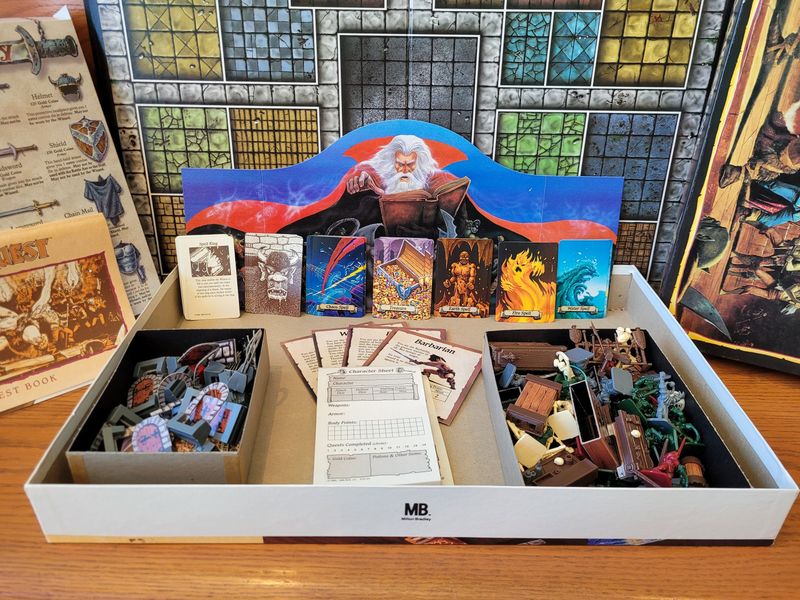
Milton Bradley teamed with Games Workshop for this dungeon game. HeroQuest came out in 1989, designed by Stephen Baker.
Players are heroes fighting monsters. One player runs the dungeon.
Check for all miniatures and furniture. Missing pieces hurt value.
Hasbro released a new version in 2020. Originals remain popular.
32. Space Hulk (1989 Games Workshop)
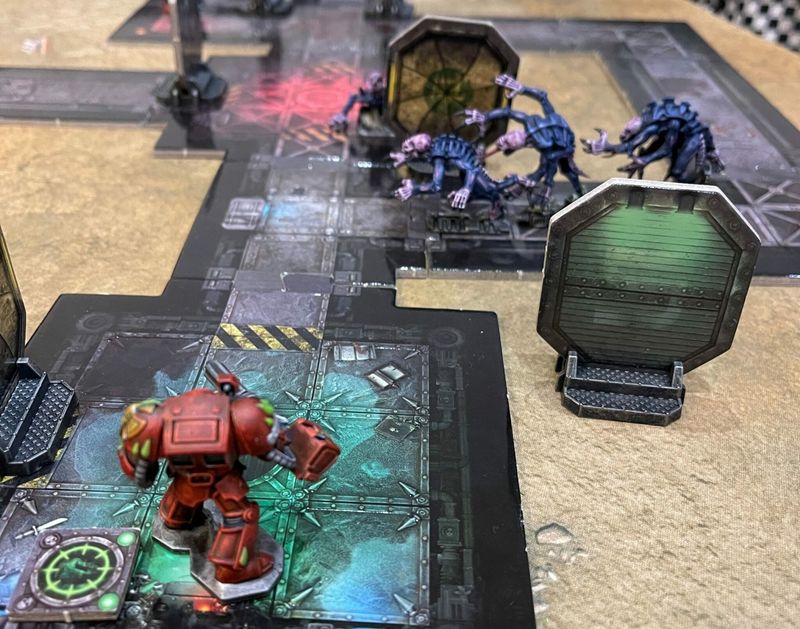
This game uses a sand timer to pressure players. Games Workshop released Space Hulk in 1989, designed by Richard Halliwell.
Space Marines fight Genestealers in tight corridors. The timer limits turns.
Check for all miniatures and tiles. Missing parts hurt value.
Later editions came out. Fans still seek the first.
33. Star Wars: The Queen’s Gambit (2000 Avalon Hill)
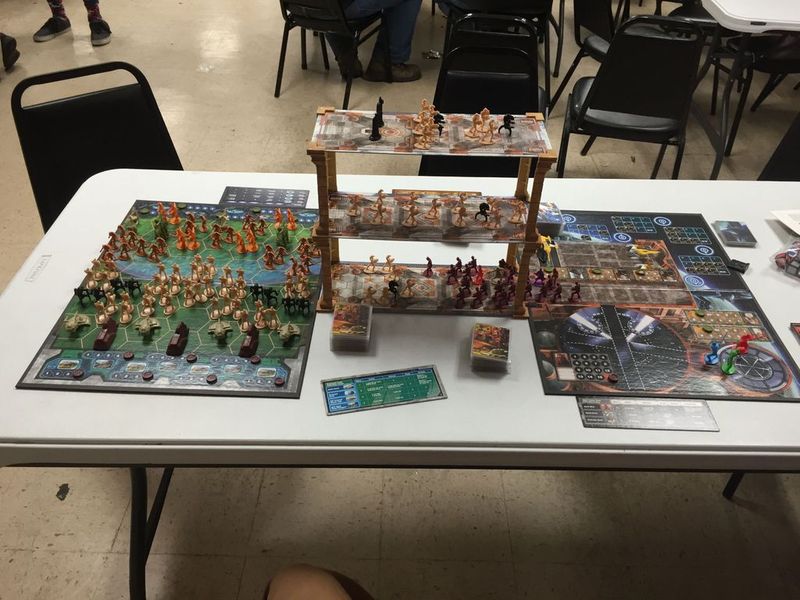
This game recreates the final battle of The Phantom Menace. Avalon Hill released Star Wars: The Queen’s Gambit in 2000.
It includes a multi-level palace and many miniatures. Players fight across several boards.
Check for all pieces. Missing parts hurt value.
It was never reprinted. Fans still look for it.
A used copy sold for £420 on eBay in October 2025.


Leave a comment